
Guard Patrolling System Malaysia – Smarter, Safer and More Accountable Security Operations
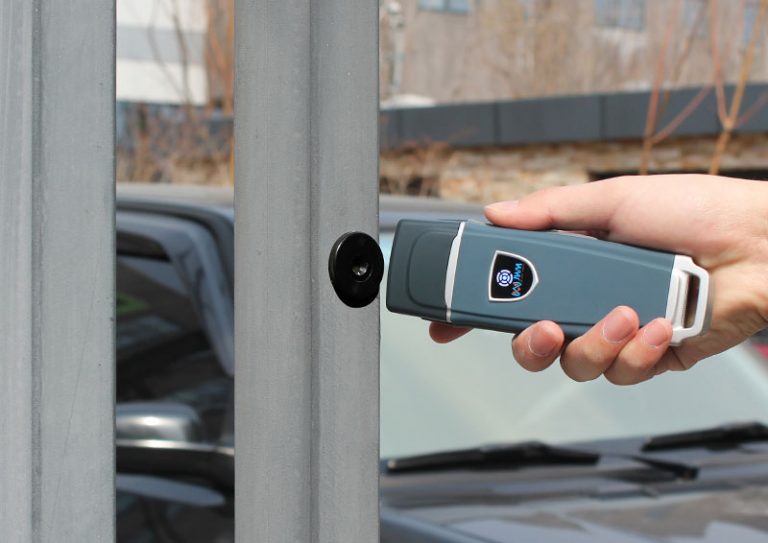
Security guards are the frontline of protection for buildings, factories, gated communities, campuses and critical facilities across Malaysia. Yet, in many organisations, patrols are still recorded using paper logbooks, handwritten checklists or simple spreadsheets. Supervisors have little real-time visibility, management struggles to verify performance, and clients often receive reports that are incomplete or difficult to audit.
A modern guard patrolling system Malaysia changes all of this. By combining mobile devices, electronic checkpoints, cloud dashboards and structured reporting, we can turn routine guard patrols into a fully traceable, data-driven security operation. Every checkpoint scan, every incident and every missed round becomes visible and actionable.
Our Guard Patrol System for Malaysia is built precisely for this purpose – to help security providers, facility managers and building owners replace manual, trust-based patrol records with verifiable, real-time information. You can learn more about our solution here:
https://www.smartouch.com.my/guard-patrol-system/
What Is a Guard Patrolling System in Malaysia?
A guard patrolling system (also called a guard tour system) is a combination of hardware and software that records and tracks guard patrols across a site or multiple sites. Instead of relying on guards to write in logbooks, the system uses checkpoints and portable devices or mobile apps to capture:
Which guard performed a patrol
Which checkpoints were visited
Exact time and date of each checkpoint scan
Incidents or abnormalities discovered during the patrol
These records are then transmitted to a central management platform, where supervisors and management can monitor patrols in real time, receive alerts, and generate reports for internal review or client reporting.
A typical guard patrolling system Malaysia deployment includes:
RFID, NFC or QR checkpoints installed at strategic locations
Guard handheld readers or smartphones running a patrol app
A cloud-based or on-premise guard tour server
Web dashboards for supervisors and managers
Automated emails and reports for clients and stakeholders
The result is a complete, tamper-resistant record of patrol activities that is far more reliable than handwritten notes.
Why Organisations in Malaysia Need a Guard Patrolling System
1. Proof of Service and Accountability
Security contracts often specify patrol frequency, locations and response times. However, without a proper system, it is difficult to prove that guards have actually performed the required rounds.
With a guard patrolling system Malaysia, you can:
Verify that each patrol was completed on time
See precisely which checkpoints were visited and which were missed
Provide detailed reports to clients as proof of service
Resolve disputes quickly with factual, time-stamped data
This builds trust between security providers and their clients and strengthens long-term business relationships.
2. Real-Time Visibility and Faster Incident Response
Paper logbooks are typically only reviewed at the end of the shift – or worse, at the end of the month. By then, it is too late to react to problems.
A modern guard patrol solution allows guards to:
Report incidents on the spot using their device
Attach photos, descriptions and incident categories
Trigger alerts to supervisors or control rooms in real time
Supervisors, in turn, can see what is happening across sites and respond immediately, not hours later. This improves response time, coordination and overall security effectiveness.
3. Reduction of Human Error and Fraud
Manual patrol logging can be:
Forgotten during busy periods
Falsified to cover missed rounds
Written illegibly, making it hard to read and verify
By using electronic checkpoints and automated recording, a guard patrolling system in Malaysia reduces the risk of human manipulation. Checkpoint scans and timestamps are recorded automatically, giving a much higher level of assurance that patrols were genuinely performed.
4. Data for Continuous Improvement
Over time, guard tour data becomes a valuable source of insight. Management can analyse:
Which areas generate the most incidents
Which patrol routes are often delayed or skipped
What times of day see the highest activity
This information supports better risk assessment, route design and manpower planning, leading to more efficient and effective security operations.
Key Features of Our Guard Patrolling System Malaysia
Our guard tour solution is designed to be practical for guards on the ground while giving management the tools they need for oversight and reporting.
1. Multiple Checkpoint Technologies – RFID, NFC and QR
Different environments require different types of checkpoints. We support:
RFID tags – durable and suitable for indoor or outdoor use
NFC tags – compact and easy to embed or conceal
QR codes – cost-effective and printable for low-risk areas
These checkpoints are installed at:
Stairwells and fire exits
Equipment rooms and control panels
Perimeter fences and gates
Lift lobbies, car parks and rooftop access points
Guards simply scan or tap the checkpoint with their device to record their presence.
2. Handheld Devices or Mobile App for Guards
Depending on your operational needs, guards can use:
Dedicated handheld readers designed for patrol use, or
Smartphones or rugged devices running our patrol application
The device guides the guard through assigned routes, displays upcoming checkpoints and allows incident reporting with just a few taps. The interface is kept simple and clear so that even guards with limited technology experience can use it confidently.
3. Real-Time Monitoring and Alerts
All patrol data is sent to a central server, where supervisors can:
View live patrol status across sites
See which guards are on duty and where they are patrolling
Receive alerts for missed checkpoints or overdue routes
Monitor high-priority incidents as they are reported
This real-time visibility allows supervisors to intervene quickly when patrols are not performed as scheduled or when incidents occur.
4. Incident and Observation Reporting
During a patrol, guards may encounter:
Unlocked doors or windows
Suspicious persons or vehicles
Hazards such as water leaks or damaged equipment
Alarm activations or faults
Our guard patrolling system Malaysia allows guards to record these observations instantly, including:
Selecting a predefined incident type
Adding notes on what was found and what action was taken
Capturing photos as supporting evidence (where devices support cameras)
Each incident is linked to a specific checkpoint, time and guard, providing a clear audit trail.
5. Detailed Reporting and Analytics
Our system includes flexible reporting options, such as:
Patrol completion reports (by site, route and guard)
Missed checkpoint and late patrol reports
Incident statistics by type, time or location
Guard performance summaries over specific periods
These reports can be exported for management review, client meetings and internal audits. They provide the data needed to demonstrate service quality and compliance with SLAs.
6. Multi-Site and Multi-Client Management
Security companies in Malaysia often protect multiple sites for different clients. Our system is designed to handle:
Multiple buildings, plants or campuses under one platform
Separate configurations and access rights for each client
Client-specific reports and dashboards where required
This allows a single security provider to manage all guard tours centrally while ensuring each client only sees their own data.
7. Integration with Other Security Systems
Our guard patrol solution can be integrated with other systems, such as:
Door access control – correlating access logs with patrol activity
CCTV – linking patrol incidents with corresponding camera footage
Visitor management systems – enhancing visibility of visitors in sensitive zones
Alarm and monitoring systems – enabling guards to respond and record actions consistently
This integrated approach provides a more complete picture of security events across the premises.
You can find more information on our Guard Patrol System here:
https://www.smartouch.com.my/guard-patrol-system/
Typical Use Cases for Guard Patrolling System Malaysia
Commercial and Office Buildings
Monitor regular patrols across lobbies, car parks, stairwells and critical rooms
Provide tenants and building owners with detailed patrol and incident reports
Enhance night-time security and after-hours monitoring
Industrial Facilities and Factories
Patrol production areas, warehouses, utilities and perimeter fences
Document safety hazards and equipment issues for maintenance follow-up
Verify that guards have checked high-risk zones at required intervals
Residential, Condominiums and Gated Communities
Patrol common areas, playgrounds, swimming pools and car parks
Record incidents such as parking violations or suspicious behaviour
Improve transparency of security services for management councils and residents
Dormitories and Worker Accommodation
Patrol dorm blocks, corridors and shared facilities
Reduce vandalism, fights and misuse of common areas
Integrate with dormitory and access control systems for complete oversight
Educational Institutions and Campuses
Monitor patrols around hostels, labs, libraries and sports facilities
Strengthen safety and security for students and staff
Provide traceability when incidents or complaints occur on campus
Hospitals and Healthcare Facilities
Patrol critical areas, storage rooms and restricted zones
Enforce security in sensitive departments such as pharmacy or ICU entrances
Provide audit-ready records for compliance and risk management
How Our Guard Patrolling System Works – A Typical Patrol Workflow
To illustrate how a guard patrolling system Malaysia operates in daily life, here is a typical scenario:
Route Planning and Configuration
Supervisors define patrol routes and checkpoints for each site.
They set patrol schedules (e.g. hourly, every 3 hours, or custom intervals).
Routes are assigned to specific guards or shifts.
Guard Login and Patrol Start
At the start of the shift, the guard logs into the device or app.
The system shows upcoming patrols and required routes.
The guard selects the route and begins the patrol.
Checkpoint Scanning
As the guard walks the route, they scan each RFID/NFC/QR checkpoint.
Each scan is time-stamped and uploaded to the server (or stored offline if there is no signal and uploaded later).
If a checkpoint is missed, the system records the omission.
Incident Reporting
When the guard notices something unusual, they open the incident screen.
They select an incident type, enter a short description and optionally take a photo.
An alert is sent to the supervisor or control room if configured.
Supervision and Live Monitoring
Supervisors view patrol progress in real time on the dashboard.
If a patrol is delayed or a checkpoint is repeatedly missed, they contact the guard for clarification or support.
End-of-Shift and Reporting
After the shift, supervisors review patrol completion status and incidents.
The system generates daily or weekly reports, which can be forwarded to clients or management.
This structured workflow reduces ambiguity, improves consistency and ensures every guard knows exactly what is expected during their patrol.
Benefits for Key Stakeholders
For Security Companies
Strong, data-backed proof that patrols are carried out according to contract
Better control of multiple sites and guards from one platform
Ability to differentiate services with professional reports and real-time dashboards
Reduced risk of client disputes and improved contract renewals
For Facility Owners and Building Management
Transparent view of how security services are delivered
Evidence to support insurance claims and investigations
Insights into security vulnerabilities and incident hotspots
Greater confidence in overall safety and risk management
For Guards and Supervisors
Clear routes and expectations – fewer misunderstandings
Simple tools to record incidents and actions
Recognition of good performance based on reliable data
Easier communication between guards in the field and the control room
Implementing Guard Patrolling System Malaysia – Our Approach
When we deploy a guard patrolling system in Malaysia, we follow a structured process to ensure smooth adoption:
Site Survey and Requirement Study
Understand site layout, risk areas and existing security procedures.
Identify routes, checkpoints and reporting needs.
System Design
Select suitable checkpoint technologies (RFID, NFC, QR) and device types.
Design patrol routes and schedules for each site and shift.
Plan integration with existing access control, CCTV or alarm systems if required.
Installation and Configuration
Install checkpoints across the site.
Configure routes, user accounts, incident categories and alert rules.
Set up the central server and dashboards.
Training and Pilot Run
Train guards, supervisors and client representatives.
Run a pilot phase to refine routes and settings based on real-world feedback.
Full Rollout and Optimisation
Extend the system to all sites and guards.
Review reports and adjust patrol plans to improve coverage and efficiency.
Provide ongoing support, maintenance and enhancements.
Move From Paper Logbooks to Smart Guard Patrolling in Malaysia
Manual guard patrol logging simply cannot match the demands of modern security operations. A robust guard patrolling system Malaysia allows organisations to move from guesswork and trust alone to a verifiable, real-time and data-driven approach.
By adopting our Guard Patrol System and integrating it with your broader security and facility management infrastructure, you gain:
Stronger accountability
Faster response to incidents
Clearer reporting for clients and audits
Better insight into how to improve security over time
To explore how our Guard Patrolling System can be implemented for your buildings, factories, residential communities or campuses in Malaysia, please visit:
https://www.smartouch.com.my/guard-patrol-system/
Smart Touch technology pte ltd , www.smartouch.com.sg +65-63964767, sales@smartouch.com.sg , www.smartouch.com.my +607-3889903 sales@smartouch.com.my