
Payroll System in Malaysia: Full 2025 Guide for Businesses
The Payroll System in Malaysia has become an essential tool for companies of all sizes. With strict statutory requirements such as EPF, SOCSO, EIS, HRD levy, and PCB tax obligations, businesses can no longer rely on spreadsheets or manual salary calculations. Today, organisations are adopting cloud payroll software Malaysia, HR payroll systems, and automated payroll solutions to ensure compliance and efficiency.
This comprehensive guide explains everything you need to know about choosing, using, and optimizing a payroll system in Malaysia. It includes insights into features, compliance, integrations, pricing, industry use cases, and future trends
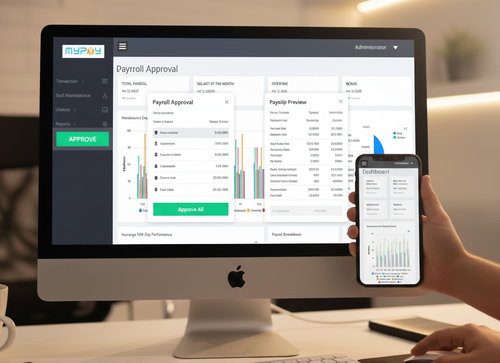
What Is a Payroll System in Malaysia?
A payroll system is a digital solution that automates the calculation of salaries, statutory deductions, claims, allowances, overtime, and monthly reports. In Malaysia, payroll software integrates:
- Monthly tax deductions (PCB)
- Employee Provident Fund (EPF)
- SOCSO & EIS
- CP39 submissions
- EA forms & yearly reporting
Modern businesses prefer using a cloud-based payroll system Malaysia, integrated with attendance tracking, leave management, and HRMS solutions
How Payroll Software Works
Payroll software automates:
- Salary processing
- Overtime calculations
- Allowances & claims
- Deduction tracking
- Statutory contributions
- e-Payslip generation
- Payroll reporting
Instead of manually entering data, the system pulls attendance, leave data, and employee profiles to calculate accurate payroll instantly
Why Malaysian Companies Are Switching to Digital Payroll
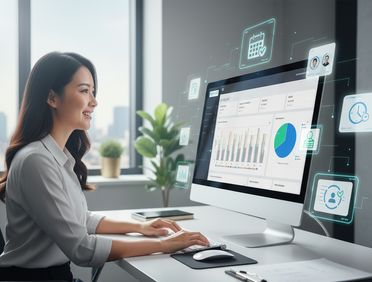
Companies are replacing manual spreadsheets with automated payroll software Malaysia because:
- Statutory laws change often
- Manual mistakes cause costly penalties
- HR teams spend too much time on monthly payroll
- Businesses need to scale faster
- Digital payroll enhances accuracy and efficiency
With a reliable payroll service Malaysia, companies avoid fines and stay compliant.
Types of Payroll Systems Used in Malaysia
Cloud Payroll Software Malaysia
The most widely used payroll system today. Features include:
- Automatic updates
- Access from anywhere
- Multi-branch support
- Real-time payroll reports
Popular among SMEs and startups
HR & Payroll Solutions Malaysia
These systems combine:
- HR management
- Leave tracking
- Attendance
- Payroll
- Claims
A complete HRMS and payroll system ensures all HR data stays centralised.
Payroll Outsourcing Malaysia
Many businesses outsource payroll for:
- Accuracy
- Compliance
- Time-saving
- Expert handling
Ideal for companies with complex payroll structures.
Key Features of a Payroll System in Malaysia
Modern payroll software offers powerful automation features.
Salary Processing & Automation
Generate monthly salaries in minutes with:
- Auto calculation
- Multi-level approval
- Allowance and claim integration
- Bonus and commission support
EPF, SOCSO & PCB Automation
Statutory compliance is the biggest reason Malaysian companies adopt payroll software.
Automatic processing includes:
- EPF contributions
- SOCSO and EIS
- HRD levy contributions
- PCB/MTD tax calculations
- CP39 digital submission
This ensures full LHDN-compliant payroll.
Leave & Attendance Integration
A complete system connects:
- Attendance system Malaysia
- Leave management system Malaysia
- Shift scheduling
This reduces data discrepancies and ensures accurate OT and no-pay leave calculations.
e-Payslip & Employee Self-Service Portal
Employees can:
- Download e-payslips
- Update personal info
- View leave balances
- Track attendance
- Access tax forms
This improves efficiency and transparency.
Benefits of Using Payroll Software in Malaysia
Statutory Compliance
Payroll systems ensure full compliance with:
- EPF Act
- SOCSO Act
- Income Tax Act
- Employment Act
- HRD Levy Act
- PCB regulations
Avoid penalties and errors with automated statutory updates.
Time Savings & Accuracy
Payroll software reduces processing time by up to 80%. Automation eliminates human error and streamlines HR workloads.
Payroll Compliance in Malaysia
Businesses must meet mandatory contributions.
EPF, SOCSO, EIS Requirements
Payroll software ensures:
- Accurate rates
- Updated statutory tables
- Auto-contribution calculations
LHDN / PCB Monthly Tax Deduction (MTD)
Automated PCB ensures employees’ monthly taxes are always accurate and compliant.
HRD Levy & CP39 Requirements
Companies contributing to HRDF require accurate levy calculations. Systems also automate:
- CP39 submissions
- EA Form generation
- Payroll audits
Payroll Software Pricing in Malaysia
| Business Type | Price |
| SMEs | RM 3–RM 10 per employee/month |
| Enterprises | RM 0.50–RM 5 per employee (bulk) |
| Payroll Outsourcing | RM 60–RM 150 per employee/month |
On-premise systems cost more due to hardware and installation fees.
How Payroll Systems Support Malaysian Industries
Manufacturing & Logistics
Large workforce & shift-based schedules require:
- Attendance integration
- Overtime automation
- Multi-location payroll
Retail & F&B
Businesses with multiple outlets use:
- Mobile clock-ins
- Cloud payroll
- Automated rostering
Professional Services & IT
These industries rely on:
- Project-based pay
- Allowance tracking
Auto-invoice integration
Cloud Payroll vs Manual Payroll
Cloud Payroll | Manual Payroll |
Accurate | Error-prone |
Fast | Slow |
Compliant | Risky |
Automated | High workload |
Scalable | Hard to scale |
Cloud payroll wins in every category.
How to Choose the Best Payroll System in Malaysia
Key Factors for SMEs
- Affordable pricing
- Cloud-based access
- HR & payroll integration
- Simple UI
Auto-statutory updates
Key Factors for Enterprises
- Multi-country payroll
- API integration
- Advanced analytics
- Complex salary structure support
Common Payroll Challenges & How to Solve Them
Challenge | Solution |
Manual errors | Payroll automation |
Non-compliance | Statutory updates |
Missing data | Integrated HRMS |
Large workforce | Cloud payroll |
Payroll System Integrations (HRMS, HRIS, Attendance)
Popular integrations include:
- HRMS Malaysia
- HRIS systems
- Face recognition attendance
- Cloud attendance system
- Leave management software
- Accounting platforms
These create a full HR ecosystem.
Future Trends of Payroll in Malaysia (2025 & Beyond)
- AI-powered payroll
- Automated statutory forecasting
- Self-service HR ecosystems
- Robotics process automation (RPA)
Full cloud-based HR stacks
H2: Frequently Asked Questions (FAQs)
Cloud-based systems with EPF, SOCSO, and PCB automation.
Yes. Most modern systems integrate with HRMS, HRIS, attendance & leave.
RM 3–RM 10 per employee/month for SMEs.
Yes. Most use encryption and PDPA-compliant servers.
Yes—cloud payroll supports multi-company & multi-branch structures.
Yes. Most systems provide digital e-payslips & portals.
Conclusion
The Payroll System in Malaysia is now a must-have tool for companies aiming to stay compliant, competitive, and efficient. With automated statutory calculations, cloud access, HRMS integration, and employee self-service features, businesses can save time, eliminate errors, and scale with confidence.
Choosing the right Malaysia payroll software ensures smooth operations, better compliance, and improved HR productivity across all industries.