
How Job Costing Systems Help Businesses Track Every Minute of Profit
In today’s competitive market, businesses must control costs carefully.
Companies that manage many projects often struggle to track expenses. Without proper tracking, profits can disappear quickly.
Therefore, organizations need a reliable system to monitor project costs.
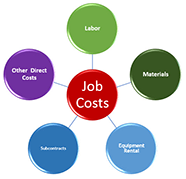
A Job Costing System provides this solution. It helps businesses track labor, materials, and operational expenses for each project.
As a result, managers gain better financial control.
What is a Job Costing System?
A Job Costing System tracks costs for specific projects or tasks.
Instead of measuring total company expenses, the system focuses on individual jobs.
For example, it records:
- Employee working hours
- Materials used for the project
- Equipment costs
- Operational overhead
Because of this, companies can see the true cost of each project.
Industries That Use Job Costing Systems
Many industries rely on job costing systems.
For example:
- Construction companies
- Manufacturing businesses
- Engineering firms
- Maintenance services
- Professional service providers
However, any company managing multiple projects can benefit from job costing.
Challenges of Tracking Project Costs
Many businesses still use spreadsheets or manual records.
However, this approach often causes problems.
Common issues include:
- Incomplete labor tracking
- Delayed financial reporting
- Poor cost visibility
- Incorrect profit estimates
As a result, businesses may lose money without realizing it.
Therefore, many organizations now adopt job costing systems.
Accurate Labor Cost Tracking
Labor is often the biggest project expense.
Because of this, companies must track employee time carefully.
A job costing system records the exact hours employees spend on each task.
This allows businesses to:
- Track project labor hours
- Monitor overtime costs
- Measure employee productivity
- Assign workers to specific jobs
Consequently, payroll costs are allocated correctly.
Real-Time Cost Monitoring
Modern job costing systems provide real-time cost monitoring.
Managers do not need to wait until the project ends.
Instead, they can see expenses as they occur.
This helps businesses:
- Detect cost overruns early
- Adjust project resources
- Improve financial control
As a result, companies can prevent unexpected losses.
Better Project Profitability Analysis
Job costing systems help managers measure project profitability.
They compare total project costs with revenue.
Important metrics include:
- Labor expenses
- Material costs
- Equipment usage
- Overhead expenses
- Project profit margins
With this information, companies can identify profitable projects.
Therefore, they can focus on high-value services.
Improved Resource Management
Efficient resource management improves productivity.
Job costing systems show how resources are used across projects.
Managers can see:
- Which employees work on each job
- How long tasks take to complete
- Which resources are overused
Consequently, managers can assign tasks more efficiently.
Better Budget Planning
Historical data is valuable for future planning.
Job costing systems store records from past projects.
These records help businesses:
- Estimate project costs
- Create accurate budgets
- Improve pricing strategies
As a result, companies reduce the risk of underpricing services.
Integration with Financial Systems
Modern job costing systems integrate with payroll and accounting software.
Because of this integration, financial data flows automatically.
For example:
- Work hours transfer to payroll
- Project expenses update accounting records
- Financial reports generate automatically
This automation saves time and reduces errors.
Increased Transparency
Job costing systems improve transparency within organizations.
Managers can see who worked on each task and how long it took.
This visibility encourages accountability among employees.
Therefore, teams become more responsible for their work.
Data-Driven Business Decisions
Accurate cost data supports better decision making.
Managers can analyze trends such as:
- Which projects generate the most profit
- Which tasks consume the most resources
- Where operational inefficiencies occur
Consequently, businesses can improve their strategies.
Modern Technology in Job Costing
Today’s job costing systems use advanced technologies.
These include cloud platforms and mobile applications.
Employees can update project data directly from job sites.
For example, workers can:
- Log work hours instantly
- Record materials used
- Submit project updates
This ensures that project data stays accurate and current.
Conclusion
Tracking project costs is essential for business success.
A Job Costing System helps companies monitor labor, materials, and operational expenses.
Because of this visibility, businesses can control costs and increase profitability.
For companies managing multiple projects, job costing systems provide a powerful tool for tracking every minute of profit.
More details about the system can be found in this product solution:
http://www.smartouch.com.my/job-costing/
Smart Touch Technology Pte Ltd
www.smartouch.com.sg | +65-63964767 | sales@smartouch.com.sg
Smart Touch Technology Malaysia
www.smartouch.com.my | +607-3889903 | sales@smartouch.com.my