
Stop Manual Rostering with a Schedule System
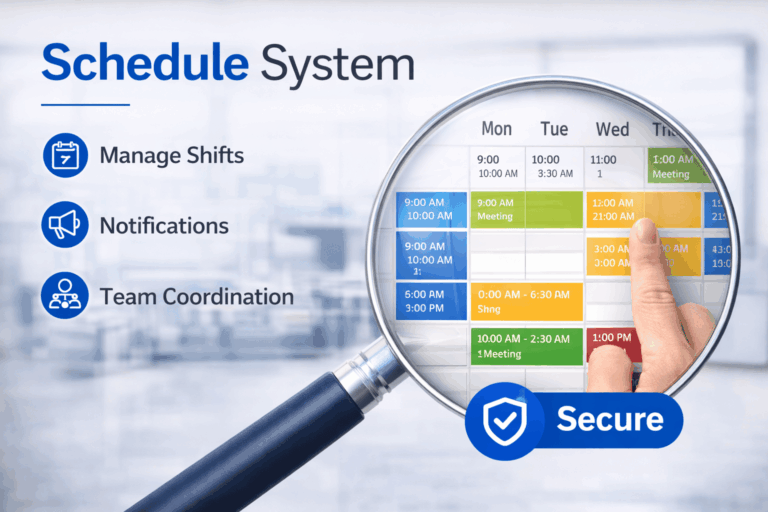
Managing employee schedules manually can be time-consuming and difficult, especially for organizations with multiple shifts, departments, or locations. Many companies still rely on spreadsheets, paper schedules, or manual coordination to manage staff rostering. However, these traditional methods often lead to scheduling conflicts, human errors, and administrative workload.
A Schedule Management System offers a smarter and more efficient way to handle employee rostering. By automating scheduling processes, businesses can manage workforce availability more effectively while improving productivity and operational efficiency.
The Challenges of Manual Rostering
Manual rostering may work for small teams, but it becomes increasingly difficult as organizations grow. Managers often spend hours creating schedules, adjusting shifts, and communicating updates to employees.
In addition, manual scheduling can lead to several problems. Shift overlaps, staff shortages, and last-minute changes may disrupt daily operations. Employees may also miss schedule updates if communication is not managed properly.
Without a centralized system, tracking employee schedules and attendance can become complicated.
What Is a Schedule Management System?
A Schedule Management System is a digital platform that helps organizations plan, manage, and monitor employee work schedules. Managers can assign shifts, adjust schedules, and track workforce availability through a centralized system.
Employees can view their schedules online and receive updates when changes are made. This improves communication and ensures everyone has access to the latest schedule information.
By automating scheduling tasks, businesses can reduce administrative work and avoid common scheduling errors.
Benefits of Using a Schedule System
Efficient Workforce Planning
Managers can easily create and adjust schedules based on employee availability, workload, and operational requirements.
Reduced Scheduling Errors
Automated scheduling helps prevent shift overlaps and ensures that the right number of employees are assigned to each shift.
Improved Communication
Employees can view their schedules digitally and receive updates instantly when changes occur.
Supporting Smarter Workforce Management
Modern workforce management systems often integrate scheduling tools with other HR functions such as attendance tracking, payroll, and leave management. This integration allows organizations to manage employee operations more efficiently.
Solutions developed by Smart Touch Technology Sdn. Bhd. provide advanced workforce management systems designed to simplify scheduling while improving productivity and operational control.
Conclusion
Manual rostering can slow down operations and create unnecessary scheduling challenges. A Schedule Management System provides an automated and organized solution for managing employee work schedules.
By replacing manual scheduling with a digital system, organizations can reduce errors, improve communication, and ensure better workforce planning.
Transform your workforce scheduling today with a smart and reliable schedule management solution.
More details about the system can be found in this product solution. Click here: https://www.smartouch.com.my/smartime-time-system/
Smart Touch technology pte ltd , www.smartouch.com.sg +65-63964767, sales@smartouch.com.sg , www.smartouch.com.my +607-3889903 sales@smartouch.com.my