
Card Access Control System Malaysia – Smarter, Safer Entry for Every Door
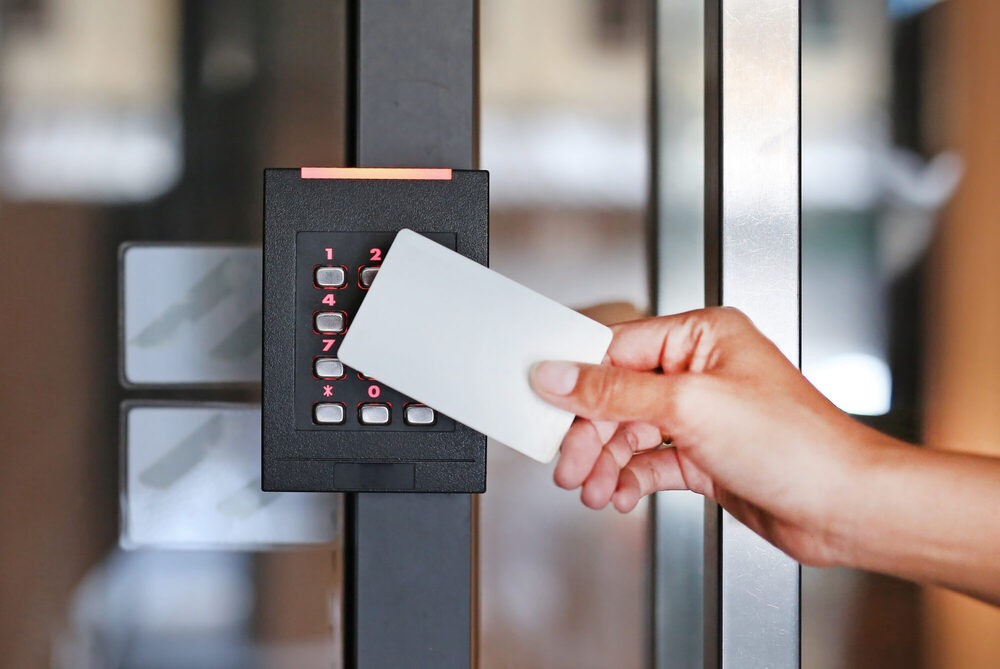
In Malaysia today, buildings are more connected, more complex and busier than ever. Offices, factories, warehouses, condominiums, campuses and hospitals all share the same core challenge: how to let the right people in easily, keep unauthorised people out, and know exactly who went where and when.
Traditional metal keys and manual logbooks simply cannot keep up:
Keys are duplicated or lost without proper tracking
Changing tenants or staff means changing locks and reissuing keys
Guardroom logbooks are incomplete and almost impossible to audit
There is no reliable trail when incidents happen
A modern card access control system in Malaysia solves these problems by replacing physical keys with smart cards, readers, controllers and central management software. Access rights are controlled electronically, events are recorded automatically, and security teams, HR and management finally share the same accurate view of door activity.
Our card-based access control portfolio in Malaysia is designed around this concept – robust hardware with practical, integration-ready software. You can explore our access control category here:
https://www.smartouch.com.my/category/access-control/
What Is a Card Access Control System in Malaysia?
A card access control system regulates entry and exit to doors, turnstiles, gates and other access points using electronic cards rather than mechanical keys.
In a typical setup:
Each user is issued a proximity or MIFARE card/tag with a unique ID.
Card readers are mounted at each controlled door or gate.
A door controller receives the card ID and checks it against a central database.
If the user is authorised for that door at that time, the controller releases the electric or EM lock.
The event is time-stamped and stored, whether access is granted or denied.
Instead of cutting and collecting keys, you manage everything through software:
Create and update user profiles
Assign, suspend or revoke cards
Define which doors and zones are accessible to which groups
Set time schedules (office hours, shifts, public holidays, after-hours rules)
Run reports on access activity for audits and investigations
For Malaysian organisations, this means better security, clearer records and far less manual effort.
Why Organisations in Malaysia Are Moving to Card Access Control
1. Stronger Security than Traditional Keys
Metal keys have fundamental weaknesses:
They can be copied without your knowledge
They leave no usable trail when used
When someone leaves the company or a key is lost, you often need to change the lock
With a card access control system in Malaysia:
Each card is uniquely tied to a specific user profile
Every attempt to open a door (success or failure) is recorded with date, time, user, door
When staff leave or contractors finish, you simply deactivate their card – no lock changes required
Suspicious activity (multiple denied attempts, out-of-hours access) can be detected and reviewed
This is vital for securing server rooms, finance areas, warehouses, labs and other sensitive zones.
2. Centralised Control for Multi-Door, Multi-Site Operations
Many Malaysian companies now operate:
Multiple floors in a single building
Several buildings within a campus or industrial park
Branches spread across states
Managing physical keys in such environments quickly becomes unmanageable. With a card access solution, you can:
Manage all doors, users and sites from one central platform
Define different access levels for departments, tenants, contractors and visitors
Apply changes once and distribute them automatically to all controllers
Roll out standard security policies consistently across the organisation
This centralised control is not just convenient – it is essential for maintaining a strong and consistent security posture.
3. Better User Experience and Professional Image
For day-to-day users, a card system is intuitive:
One card can open office doors, lift lobbies, car park barriers and turnstiles (when integrated)
Staff do not need to juggle bulky keyrings or remember different keys
Visitors and contractors can be issued temporary cards with limited access and automatic expiry
From a visitor’s perspective, card access points and turnstiles project a modern, well-managed image and reassure them that the building takes safety and security seriously.
4. Clean Audit Trails and Compliance Support
When something goes wrong – missing assets, data leaks, vandalism – a common question is:
“Who had access to this room, and who entered around that time?”
With card access control:
You can pull detailed logs for specific users, doors or time windows
You can prove who did or did not enter an area, supporting investigations and insurance claims
You can demonstrate proper access control for client audits, internal compliance and industry standards
This is particularly important for sectors such as finance, healthcare, logistics, manufacturing and technology.
Key Components of Our Card Access Control System in Malaysia
Our card access portfolio is built as a complete solution, not just individual devices. It can start small and scale up as your needs grow.
1. Cards and Credentials
We support a wide range of card technologies commonly used in Malaysia:
Proximity (RFID) cards and tags – simple, reliable and cost-effective
MIFARE cards – with more memory and flexibility for multi-application usage
Cards can be:
Plain white, or printed with company logo, staff name and photo
Used purely for doors or shared with attendance, canteen, dormitory and parking systems
Combined with PIN codes or biometrics in high-security areas
Each card ID is stored in the system and mapped to a user record, making it easy to monitor and update permissions.
2. Card Readers and Door Controllers
At each controlled access point, the system uses:
Card readers – mounted at the door, gate or turnstile
Door controllers – mounted on the secure side, making the actual access decisions
Locks – EM locks, electric strikes or bolts to physically secure the door
Door contacts – detecting forced doors or doors left open
Exit buttons / REX sensors – allowing safe and convenient exit
By separating readers and controllers, you reduce the risk that tampering with a reader can directly unlock a door.
3. Central Management Software
The software platform is where your card access control system in Malaysia comes together:
Maintain a central user and card database
Create access groups (e.g. Staff, Visitor, Contractor, Management, Tenant A, Tenant B)
Assign doors and time schedules to each group
Monitor door status and alarms in real time
Generate logs and reports by user, door, zone, branch or period
Authorised administrators can manage multiple sites from a single interface, making it easy to scale from a single office to a nationwide footprint.
4. Optional Multi-Factor and Biometric Integration
Cards are a strong base, but some environments require more:
Server rooms and data centres
HR, finance and cash-handling areas
Labs, R&D facilities and sensitive warehouses
In these areas, card access can be combined with:
PIN pads – card + PIN for dual verification
Biometric devices – card + fingerprint or card + facial recognition
This layered defence keeps your environment convenient for most doors while providing extra protection where it truly matters.
You can see our access control hardware and options here:
https://www.smartouch.com.my/category/access-control/
Integration with Other Systems and Services
A major advantage of deploying a card access control system in Malaysia through our platform is integration. The same card used for opening doors can be used across a wide ecosystem of Smart Touch solutions.
1. Time Attendance and Payroll
Using attendance-capable readers or dedicated time clocks:
Employees tap the same card to clock in and out
Attendance data is captured electronically and sent to Smartime or other time management modules
Approved hours flow to payroll systems such as SmartPay for salary calculation
This removes manual timesheets, reduces errors and creates a single point of truth for both security and HR.
2. Car Park Barrier Gates
When card readers are installed at barriers:
Staff, tenants and residents can use the same card for car park entry
Season parking privileges can be managed centrally
Vehicle entries and pedestrian access share a common identity base
This integration is especially effective for office towers, mixed-use developments and condominiums where card-based access is needed from gate to door.
3. Turnstiles, Flap Gates and Lift Control
In higher-security or high-traffic buildings, cards can be used at:
Lobby turnstiles and flap barriers – to control and count pedestrian entry
Lift access systems – so cards only unlock buttons for authorised floors
Combined with door access, this creates a layered building security system that controls movement from perimeter to individual rooms.
4. Canteen, Dormitory, Guard Patrol and Visitor Systems
Because the same card ID can be shared with other modules, your organisation can:
Use cards for cashless canteen spending
Control dormitory block and room access based on residency status
Equip guards with patrol checkpoints and readers that use card-based verification
Issue visitor cards that follow the same rules, but with limited permissions and validity
All of this runs on a common identity layer, minimising duplication and administrative effort.
Explore our access-related product line here:
https://www.smartouch.com.my/category/access-control/
Typical Use Cases for Card Access Control System in Malaysia
1. Corporate Offices and Business Towers
Control access to main entrances, lift lobbies and office suites
Protect server rooms, HR and finance rooms with stronger rules (card + PIN or biometric)
Provide clean access logs for audits and incident investigations
Integrate with car park and lift systems for a seamless office journey
2. Factories, Warehouses and Industrial Facilities
Restrict access to production lines, stores and high-risk zones
Ensure only authorised, trained operators can enter certain areas
Combine door access with attendance tracking for shift and overtime control
Protect tools, raw materials and finished goods with clear access rules and logs
3. Retail Chains, F&B Groups and Service Outlets
Secure back-of-house areas, kitchens, cash offices and stock rooms
Provide different permissions for full-time staff, part-timers and delivery partners
Standardise access policies across branches while managing centrally
4. Educational Institutions and Training Centres
Control access to labs, computer rooms, libraries and hostels
Differentiate access for staff, students, contractors and visitors
Use logs to support campus safety, incident investigations and exam security
5. Hospitals, Clinics and Life Sciences
Protect pharmacies, drug stores and medical records rooms
Enforce strict access control around theatres, cleanrooms and lab areas
Collect auditable records for internal governance and external accreditation
6. Residential Condominiums and Gated Communities
Provide residents with cards for gate, lift lobby and facility access
Manage visitor cards at the guardhouse with time-limited access
Restrict use of gyms, pools and function rooms to registered residents only
How a Card Access Control System Works Day-to-Day
Here is how a typical card access control system in Malaysia operates in real life:
Onboarding a New User
HR or admin creates a new staff or tenant record.
A card is issued and its unique ID is registered to that profile.
The user is assigned to access groups (e.g. HQ Office, Warehouse, Block A).
Normal Operation
The user taps the card at authorised doors and gates.
The controller checks permissions and unlocks the door if valid.
Events are recorded automatically in the central log.
Monitoring and Alerts
Security views live door status (normal, forced, held open, offline).
Suspicious patterns such as repeated denied attempts can be reviewed.
Alarm integration triggers responses when critical doors are forced.
Changes in Role or Department
When a user changes department, their access rights are updated centrally.
New rights sync to controllers without new hardware.
Off-boarding
When someone leaves, their card is disabled with a few clicks.
Even if the card is not returned, it no longer opens any doors.
Reporting and Audit
HR, security or management generate reports by door, user, date or incident.
Data supports investigations, performance reviews and compliance audits.
Benefits for Key Stakeholders
For Security and Facility Teams
Central, real-time control over every controlled door
Easier management of staff, contractor and visitor access
Stronger response capability with live status and alerts
Detailed logs to support incident response and security reviews
For HR and Management
Shared user database across access control, attendance and HR systems
Cleaner attendance data (when integrated with time management)
Better insight into building usage and after-hours access
Stronger compliance with internal policies and external expectations
For Employees, Tenants and Residents
Convenient, consistent access with a single card
Less hassle from lost keys and manual sign-in processes
Greater confidence in the safety and professionalism of the environment
Implementing Card Access Control System in Malaysia – Our Approach
When we deploy a card access control system in Malaysia, we typically follow a structured path to ensure smooth adoption and long-term scalability:
Requirement Study and Site Survey
Identify which doors, gates and zones need control
Understand user groups, working hours and risk levels
Review current pain points and future expansion plans
System Design
Select reader types (card-only, card + PIN, integration with biometrics)
Plan controller, lock and cabling layout for reliability and safety
Define access groups, time zones and integration needs (attendance, parking, visitor systems, etc.)
Installation and Configuration
Install readers, controllers, locks, door contacts and exit buttons
Configure the software platform, users, cards and access rules
Integrate with related systems where required
Testing and Training
Test normal access, forced door and alarm scenarios
Train admins, security and guardhouse staff
Provide user guidance for staff, tenants and residents
Go-Live and Optimisation
Roll out in phases where necessary (by floor, block or site)
Monitor performance and user feedback
Fine-tune rules, groups and time zones as operations evolve
Ongoing Support and Growth
Provide maintenance, updates and technical support
Add new doors, blocks, branches or modules when your needs expand
Build a Modern Security Foundation with Card Access Control System Malaysia
As buildings and operations become more complex, card access control is no longer optional – it is a foundational layer of security and operations. A well-designed card access control system in Malaysia helps you:
Replace vulnerable metal keys with manageable, electronic credentials
Centrally control who can go where, and when
Integrate access with attendance, parking, dormitory, canteen, visitor and patrol systems
Provide the audit trails and visibility that modern organisations need
To explore the card-based access control options available for your office, factory, campus, condominium or multi-site environment, please visit:
https://www.smartouch.com.my/category/access-control/
Smart Touch technology pte ltd , www.smartouch.com.sg +65-63964767, sales@smartouch.com.sg , www.smartouch.com.my +607-3889903 sales@smartouch.com.my