Why Every Business Needs a Unified Management System
In the modern digital economy, businesses are facing increasing complexity in managing operations, employees, customers, finances, and data. As organizations grow, they often adopt multiple software tools to handle different functions such as accounting, human resources, project management, inventory tracking, and customer relationship management. While these tools may individually perform well, using disconnected systems often leads to inefficiencies, data silos, communication gaps, and costly operational errors.
This is where a Unified Management System (UMS) becomes essential. A unified management system integrates various business processes into one centralized platform, allowing organizations to streamline operations, improve collaboration, and make smarter decisions based on real-time data.
Companies that adopt unified systems gain a significant competitive advantage by reducing complexity, increasing productivity, and improving transparency across all departments. In this article, we explore why every business—regardless of size or industry—needs a unified management system and how it can transform business performance.
What is a Unified Management System?
A Unified Management System is an integrated digital platform that consolidates multiple business functions into one centralized system. Instead of managing operations through separate software applications, a unified system connects all processes and data into a single ecosystem.
Typical business functions that can be integrated into a unified management system include:
- Workforce management
- Job costing and project tracking
- Payroll and HR management
- Customer relationship management (CRM)
- Inventory and asset management
- Accounting and finance
- Task and workflow management
- Reporting and analytics
By centralizing these functions, businesses can eliminate the inefficiencies caused by fragmented systems.
A unified system acts as the single source of truth, where all business data is stored, processed, and analyzed.
The Problem with Disconnected Business Systems
Many businesses start with standalone tools to solve individual problems. Over time, they may accumulate several different systems that do not communicate with each other.
For example:
- The HR department uses one system for attendance tracking
- Finance uses a different system for payroll
- Project managers track work progress in spreadsheets
- Sales teams manage customers through CRM software
- Inventory is managed through another platform
While each tool may work independently, the lack of integration creates several operational challenges.
Data Silos
When systems are disconnected, information becomes trapped in isolated databases. Employees must manually transfer data between systems, which increases the risk of errors.
Duplicate Work
Teams often spend significant time entering the same information into multiple systems. This duplication wastes time and reduces productivity.
Lack of Real-Time Insights
Without a unified system, management cannot easily obtain a complete overview of business performance.
Decision-makers may rely on outdated or incomplete information.
Increased Operational Costs
Maintaining multiple software platforms increases licensing costs, training requirements, and IT maintenance expenses.
Benefits of Implementing a Unified Management System
1. Centralized Data Management
A unified management system provides a centralized database where all business information is stored.
This allows organizations to access real-time data across departments. Employees can quickly retrieve information without switching between multiple systems.
Centralized data also improves accuracy and reduces inconsistencies.
2. Improved Operational Efficiency
When all business processes are integrated into a single platform, workflows become significantly more efficient.
For example:
- Employee attendance automatically feeds into payroll calculations
- Project hours automatically update job costing reports
- Sales orders automatically update inventory records
Automation eliminates manual processes and reduces administrative workload.
3. Better Decision-Making Through Real-Time Analytics
Modern unified management systems provide advanced reporting and analytics tools that allow businesses to monitor performance in real time.
Managers can generate dashboards and reports such as:
- Workforce productivity reports
- Financial performance analysis
- Project profitability reports
- Inventory movement tracking
- Customer engagement insights
These insights allow leaders to make informed decisions based on accurate data.
4. Enhanced Collaboration Across Departments
When teams operate within a unified system, communication becomes more seamless.
Employees from different departments can access the same information and collaborate more effectively.
For example:
- HR can coordinate with project managers on workforce availability
- Finance can monitor project costs in real time
- Operations can track employee performance and job progress
This transparency improves teamwork and reduces misunderstandings.
5. Reduced IT Complexity
Managing multiple software systems can be complicated and expensive.
A unified management system simplifies IT infrastructure by consolidating several tools into one platform.
Benefits include:
- Lower software licensing costs
- Simplified system maintenance
- Reduced integration issues
- Easier employee training
This makes the entire technology ecosystem more manageable.
6. Increased Business Scalability
As businesses grow, operational complexity increases.
Unified management systems are designed to scale with the organization. Companies can add new modules and functionalities without disrupting existing workflows.
For example, a growing company may start with workforce management and later add:
- Inventory management
- Project management
- Customer relationship management
- Financial analytics
The system evolves together with the business.
7. Improved Compliance and Security
Regulatory compliance and data security are critical concerns for modern businesses.
Unified management systems provide centralized control over data access, ensuring that sensitive information is protected.
Organizations can implement:
- Role-based access control
- Secure authentication
- Data encryption
- Audit trails
These features help businesses comply with industry regulations and protect confidential information.
Industries That Benefit Most from Unified Management Systems
Although unified systems benefit all businesses, they are particularly valuable for industries that manage complex operations.
These include:
Construction and Engineering
Project tracking, workforce allocation, and job costing can all be managed through a unified system.
Manufacturing
Production planning, inventory management, workforce scheduling, and financial reporting can be integrated.
Facility Management and Maintenance
Companies can track service requests, technician schedules, job costs, and equipment usage.
Logistics and Transportation
Fleet management, delivery tracking, workforce scheduling, and billing can be unified into a single platform.
Service-Based Businesses
Businesses such as cleaning services, security companies, and technical support providers can monitor employee performance and project costs more effectively.
Cloud-Based Unified Systems: The Future of Business Management
Modern unified management systems are increasingly built on cloud platforms.
Cloud-based systems provide several advantages:
- Access from anywhere through internet connectivity
- Automatic system updates
- Lower hardware requirements
- Improved data backup and disaster recovery
Businesses can manage operations remotely, making cloud solutions ideal for organizations with distributed teams or multiple locations.
Signs Your Business Needs a Unified Management System
Many companies delay adopting unified systems until operational problems become severe.
Some common signs that a business needs a unified management system include:
- Employees spend too much time on manual data entry
- Different departments use disconnected software tools
- Management struggles to obtain accurate reports
- Payroll errors frequently occur
- Project costs are difficult to track
- Communication gaps exist between teams
If these issues are present, implementing a unified management system can significantly improve business performance.
Conclusion
In an increasingly competitive and technology-driven marketplace, businesses must operate with speed, accuracy, and efficiency. Fragmented software systems can create unnecessary complexity and prevent organizations from achieving their full potential.
A Unified Management System solves these challenges by integrating business operations into a single intelligent platform. By centralizing data, automating workflows, improving collaboration, and providing real-time insights, unified systems empower businesses to make smarter decisions and operate more efficiently.
Organizations that embrace unified management technology position themselves for sustainable growth, operational excellence, and long-term success in the digital era.
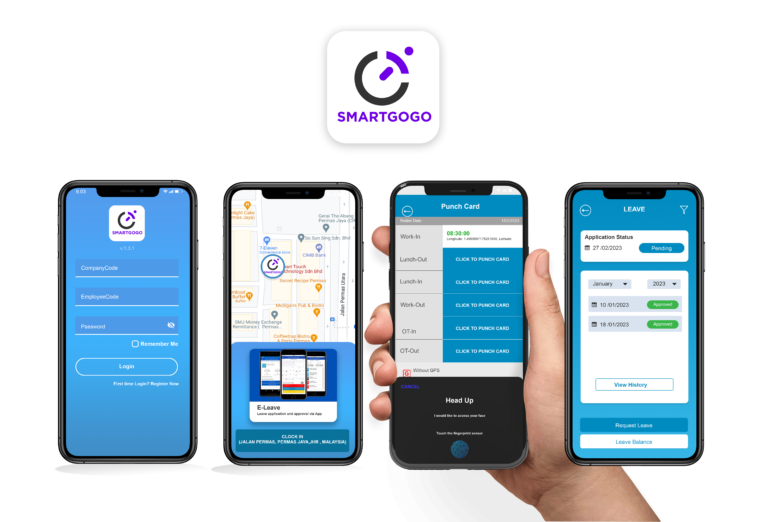
More details about the system can be found in this product solution. Click here: https://www.smartouch.com.my/smartgogo/
Smart Touch technology pte ltd , www.smartouch.com.sg +65-63964767, sales@smartouch.com.sg , www.smartouch.com.my +607-3889903 sales@smartouch.com.my