
Comprehensive Workforce Management & Job Costing Systems
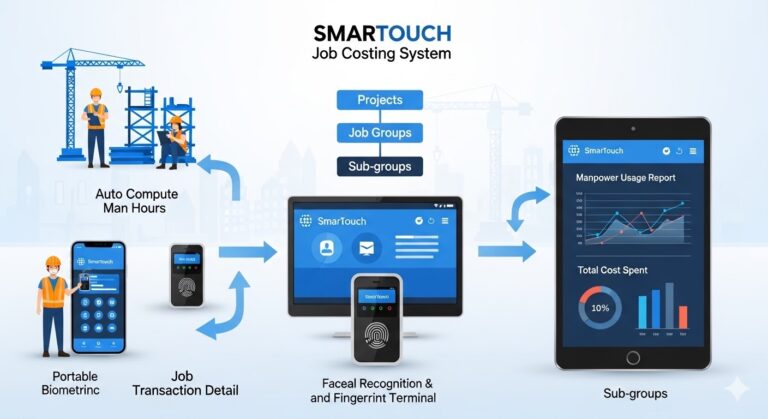
In today’s competitive and fast-paced business environment, organizations must operate with maximum efficiency while maintaining full visibility over workforce productivity and operational costs. Companies across industries such as construction, manufacturing, logistics, facility management, engineering, and services face increasing challenges in tracking employee performance, monitoring labor costs, managing projects, and ensuring profitability.
This is where Comprehensive Workforce Management and Job Costing Systems become essential tools. By integrating employee tracking, time attendance, project allocation, labor cost analysis, and reporting into a single intelligent platform, businesses can transform the way they manage operations.
In this article, we explore how workforce management and job costing systems work, their key features, and why they are crucial for modern organizations seeking improved efficiency, transparency, and profitability.
What is a Workforce Management System?
A Workforce Management System (WFM) is a technology solution designed to help organizations manage their employees effectively. It enables businesses to track working hours, monitor attendance, manage shift schedules, allocate resources, and analyze workforce productivity.
Traditional workforce management often relied on manual spreadsheets, punch cards, or disconnected software systems. These outdated methods often lead to errors, time theft, payroll discrepancies, and inefficient resource allocation.
Modern workforce management systems integrate several functions into one centralized platform, providing real-time data and automation capabilities.
Key workforce management functions include:
- Time and attendance tracking
- Employee scheduling and shift planning
- Mobile workforce monitoring
- GPS and biometric attendance
- Leave management
- Overtime monitoring
- Payroll integration
- Productivity analytics
With real-time data access, managers can make better decisions, reduce administrative work, and improve workforce efficiency.
Understanding Job Costing Systems
While workforce management focuses on employees, Job Costing Systems focus on the financial side of projects and tasks.
Job costing systems help businesses track and allocate all costs associated with a specific project, job, or work order. These costs typically include:
- Labor costs
- Equipment usage
- Materials
- Subcontractor expenses
- Overhead costs
By tracking these costs in detail, businesses gain clear insights into project profitability and operational efficiency.
For example, in industries such as construction, engineering, and maintenance services, every job may involve multiple workers, equipment, and materials. Without accurate job costing, companies may not know whether a project is profitable until it is too late.
A job costing system provides transparency by capturing every cost component and linking it directly to a specific project.
Why Businesses Need Integrated Workforce Management and Job Costing
When workforce management and job costing systems are integrated, businesses gain powerful operational intelligence.
Instead of managing employees and costs separately, organizations can track who worked, what work was performed, how long it took, and how much it cost — all in one system.
This integration allows companies to:
- Monitor labor costs in real time
- Identify productivity issues
- Prevent cost overruns
- Improve project planning
- Increase operational transparency
- Enhance financial control
In industries where labor is the largest operational cost, integrated workforce and job costing systems become vital for maintaining profitability.
Key Features of a Comprehensive Workforce Management & Job Costing System
1. Real-Time Time & Attendance Tracking
Accurate attendance tracking is the foundation of workforce management. Modern systems use advanced technologies such as:
- Biometric fingerprint scanning
- Facial recognition
- RFID cards
- Mobile GPS attendance
These technologies ensure that employee working hours are accurately recorded and eliminate time fraud.
Real-time attendance monitoring also allows supervisors to see who is present, absent, or late at any moment.
2. Mobile Workforce Tracking
Many industries operate with employees working remotely or on project sites. Mobile workforce management tools allow employees to check in and out using smartphones.
Mobile features typically include:
- GPS location verification
- Mobile timesheets
- Task assignment
- Work progress updates
- Photo documentation
Managers can monitor remote workers without needing them to return to the office.
3. Job and Project Allocation
A comprehensive system enables managers to assign employees to specific projects or job tasks.
Each job can include details such as:
- Project location
- Assigned workers
- Task descriptions
- Estimated work hours
- Required equipment
This allows organizations to track workforce deployment and ensure that the right employees are assigned to the right tasks.
4. Labor Cost Tracking
Labor is often the largest operational expense for businesses.
Job costing systems calculate labor costs automatically based on:
- Employee wage rates
- Overtime hours
- Project allocation
- Working hours per job
This provides a detailed breakdown of how much labor cost is associated with each project or task.
Managers can easily identify which jobs are profitable and which require cost adjustments.
5. Equipment and Resource Tracking
In addition to labor costs, job costing systems can track equipment and resource usage.
Businesses can record:
- Equipment operating hours
- Machinery allocation
- Maintenance costs
- Material usage
This ensures that every cost component is accurately recorded and assigned to the correct project.
6. Automated Payroll Integration
Workforce management systems simplify payroll processing by automatically calculating employee wages based on attendance records and working hours.
Payroll automation reduces human error and ensures compliance with labor regulations.
Payroll data can include:
- Regular working hours
- Overtime hours
- Leave deductions
- Allowances
- Project-based compensation
This saves significant administrative time for HR departments.
7. Productivity and Performance Analytics
Modern workforce management systems provide powerful reporting and analytics tools.
Managers can generate reports such as:
- Employee productivity reports
- Project cost analysis
- Job profitability reports
- Attendance trends
- Labor utilization rates
These insights help organizations identify inefficiencies and implement data-driven improvements.
Benefits of Implementing Workforce Management & Job Costing Systems
Increased Operational Efficiency
Automation reduces manual administrative tasks, allowing HR and management teams to focus on strategic activities.
Improved Cost Control
Businesses gain complete visibility over labor and project costs, enabling better budgeting and cost management.
Better Decision Making
Real-time analytics and reports help managers make informed decisions regarding workforce allocation and project planning.
Enhanced Accountability
Employee activities, attendance, and job assignments are recorded digitally, improving accountability across the organization.
Reduced Payroll Errors
Automated time tracking and payroll integration eliminate discrepancies and reduce payroll disputes.
Improved Project Profitability
With accurate job costing data, businesses can price projects correctly and maintain healthy profit margins.
Industries That Benefit from Workforce Management & Job Costing Systems
These systems are widely used across multiple industries, including:
- Construction
- Engineering
- Manufacturing
- Maintenance and facility management
- Logistics and transportation
- Security services
- Cleaning services
- Field service companies
Any organization that manages employees across multiple projects or locations can benefit significantly from these systems.
Future Trends in Workforce Management Technology
As technology continues to evolve, workforce management systems are becoming even more powerful through innovations such as:
Artificial Intelligence and Predictive Analytics
AI-powered systems can analyze workforce patterns and predict staffing needs, reducing scheduling conflicts and overtime costs.
Cloud-Based Platforms
Cloud systems allow businesses to access workforce data anytime, anywhere, improving flexibility and scalability.
Biometric and Facial Recognition Technologies
Advanced biometric systems enhance security and accuracy in employee attendance tracking.
IoT and Smart Devices Integration
Internet of Things (IoT) devices can monitor equipment usage and automatically update job costing records.
These technologies are shaping the future of workforce and project management.
Conclusion
Comprehensive Workforce Management and Job Costing Systems are no longer optional tools — they are essential solutions for businesses that want to remain competitive in today’s dynamic market.
By integrating workforce tracking, project allocation, labor cost monitoring, and analytics into a unified platform, organizations gain full operational visibility and control. This enables companies to improve productivity, reduce costs, and ensure project profitability.
Businesses that adopt advanced workforce and job costing technologies will be better positioned to scale operations, optimize resources, and achieve long-term success.
More details about the system can be found in this product solution. Click here: http://www.smartouch.com.my/job-costing/
Smart Touch technology pte ltd , www.smartouch.com.sg +65-63964767, sales@smartouch.com.sg , www.smartouch.com.my +607-3889903 sales@smartouch.com.my