
The Future of Access Control: Why BAS is the Ultimate Security Secret for 2026
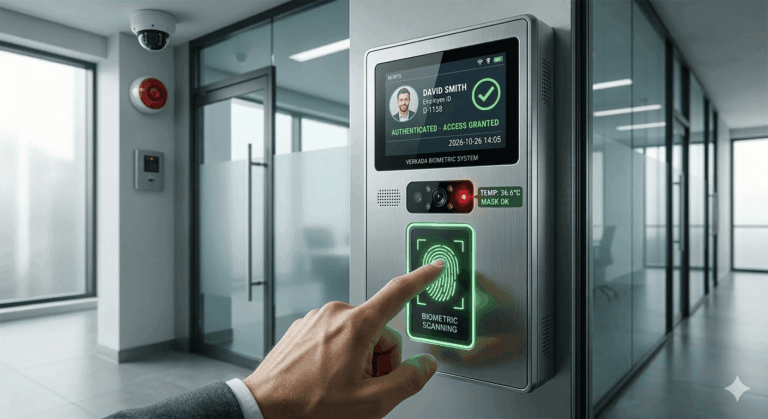
As businesses continue to embrace digital transformation, security has become one of the most critical concerns for organizations worldwide. Traditional access control methods such as physical keys, PIN codes, and RFID cards are no longer sufficient to address the evolving security challenges faced by modern workplaces. Lost cards, shared passwords, and unauthorized access remain common issues that can compromise sensitive areas within a facility.
To overcome these vulnerabilities, companies are turning to Biometric Authentication Systems (BAS) as the next generation of secure access control. By leveraging unique biological characteristics such as fingerprints, facial recognition, iris scans, and palm vein patterns, biometric authentication systems provide a highly secure and convenient way to verify identities.
As we approach 2026, BAS technology is rapidly becoming the ultimate security solution for smart buildings, corporate offices, industrial facilities, and high-security environments. In this article, we explore how biometric authentication systems are transforming access control and why they are considered the future of workplace security.
What is a Biometric Authentication System (BAS)?
A Biometric Authentication System (BAS) is a security technology that uses unique physical or behavioral characteristics to verify a person’s identity before granting access to a facility, device, or system.
Unlike traditional authentication methods that rely on something a user has (access card) or knows (PIN code), biometric authentication relies on something a person is.
Common biometric technologies include:
- Fingerprint recognition
- Facial recognition
- Iris scanning
- Palm vein recognition
- Voice recognition
These identifiers are extremely difficult to replicate or steal, making biometric authentication one of the most secure access control methods available today.
Once a user’s biometric data is enrolled in the system, the BAS compares real-time scans with stored templates to verify identity instantly.
Why Traditional Access Control is No Longer Enough
For decades, organizations relied on keys, access cards, and passwords to secure their facilities. While these methods were effective in the past, they now present several limitations.
Common security issues with traditional systems include:
- Lost or stolen access cards
- Shared PIN codes among employees
- Difficulty tracking unauthorized access
- High cost of replacing lost credentials
- Limited accountability for security breaches
In many cases, a lost access card can immediately compromise building security if not detected quickly.
Biometric authentication eliminates these risks because biometric credentials cannot be lost, forgotten, or shared.
This is why businesses are increasingly upgrading their access control systems to biometric solutions.
1. Unmatched Security Through Unique Identity Verification
One of the biggest advantages of biometric authentication systems is their ability to verify identities with exceptional accuracy.
Every individual possesses unique biometric characteristics that cannot easily be duplicated. This makes biometric authentication significantly more secure than traditional methods.
For example:
- No two fingerprints are identical
- Facial recognition analyzes multiple facial landmarks
- Iris patterns are unique even among identical twins
Because biometric identifiers are unique to each person, the system ensures that only authorized individuals can access restricted areas.
This greatly reduces the risk of impersonation and unauthorized entry.
2. Contactless and Touchless Authentication
In recent years, the demand for contactless technologies has increased significantly, especially in workplaces and public facilities.
Modern biometric systems now offer touchless authentication methods, particularly through facial recognition and iris scanning.
These technologies allow users to gain access simply by standing in front of a scanner, without touching any surfaces.
Contactless biometric systems provide several benefits:
- Improved hygiene and health safety
- Faster entry and exit for employees
- Reduced wear and tear on devices
- More convenient user experience
As businesses continue to prioritize workplace safety and efficiency, touchless biometric access control is becoming increasingly popular.
3. Seamless Integration with Smart Building Systems
One of the most powerful features of biometric authentication systems is their ability to integrate with other smart building technologies.
A BAS can work alongside systems such as:
- CCTV surveillance systems
- Visitor management systems
- Time attendance systems
- Building automation systems
- Security alarm systems
For example, when an employee enters the building using biometric authentication, the system can automatically log attendance, activate lighting, and enable workstation access.
This integration creates a fully connected and intelligent workplace environment.
4. Faster and More Convenient Access
Traditional access methods often require employees to carry cards or remember passwords, which can slow down entry processes.
Biometric authentication simplifies access by allowing users to verify their identity instantly.
With facial recognition systems, authentication can take less than one second, enabling fast and seamless entry even during peak hours.
This is particularly useful in environments such as:
- Corporate office buildings
- Manufacturing plants
- Airports and transportation hubs
- Data centers and secure facilities
Faster authentication improves operational efficiency while maintaining high security standards.
5. Accurate Access Logs and Audit Trails
Biometric authentication systems provide detailed records of every access event within a facility.
Each time a user authenticates, the system records information such as:
- User identity
- Access location
- Date and time of entry
- Access status (granted or denied)
These logs provide valuable insights for security teams and help organizations maintain full visibility over facility access.
In the event of a security incident, administrators can easily review access logs to identify suspicious activities or unauthorized attempts.
6. Reduced Administrative Costs
Managing physical access credentials such as keycards can be costly and time-consuming.
Organizations must regularly replace lost cards, update access permissions, and maintain card printing systems.
Biometric authentication significantly reduces these administrative tasks.
Since biometric data is permanently associated with an individual, there is no need to issue replacement credentials.
This results in:
- Lower operational costs
- Reduced administrative workload
- Simplified user management
For large organizations with thousands of employees, these savings can be substantial.
7. The Role of AI and Cloud Technology in BAS
As biometric technology evolves, artificial intelligence and cloud computing are enhancing the capabilities of biometric authentication systems.
AI-powered biometric systems can:
- Improve recognition accuracy
- Detect spoofing attempts
- Identify suspicious behavioral patterns
- Adapt to environmental changes such as lighting conditions
Cloud-based biometric platforms also allow organizations to manage access control across multiple locations through a centralized dashboard.
This makes BAS an ideal solution for businesses with distributed offices or global operations.
Why BAS Will Dominate Security in 2026
The future of access control is increasingly moving toward identity-based security rather than credential-based security.
Biometric authentication systems are uniquely positioned to lead this transformation because they provide:
- Higher security than traditional systems
- Faster and more convenient authentication
- Seamless integration with smart building infrastructure
- Scalable and future-ready technology
By 2026, biometric authentication is expected to become a standard feature in smart offices, industrial facilities, hospitals, and high-security environments.
Organizations that adopt BAS early will gain a significant advantage in protecting their assets, employees, and sensitive information.
Conclusion
As security threats continue to evolve, businesses must adopt more advanced and reliable solutions to protect their facilities and resources.
Biometric Authentication Systems (BAS) represent the next generation of access control by leveraging unique biological identifiers to provide unmatched security and convenience.
With capabilities such as contactless authentication, smart system integration, real-time monitoring, and AI-powered recognition, BAS is quickly becoming the ultimate security solution for modern workplaces.
For organizations preparing for the future of smart buildings and intelligent security infrastructure, investing in biometric authentication systems is no longer optional—it is a strategic necessity.
More details about the system can be found in this product solution. Click here: https://www.smartouch.com.my/bas/
Smart Touch technology pte ltd , www.smartouch.com.sg +65-63964767, sales@smartouch.com.sg , www.smartouch.com.my +607-3889903 sales@smartouch.com.my