
Why Employees Cheat Attendance & How to Stop It
In today’s competitive business environment in Malaysia, companies are increasingly focused on productivity, accountability, and operational efficiency. However, one persistent issue continues to undermine these efforts—employee attendance cheating.
From buddy punching to falsified work hours, attendance fraud may seem like a minor issue on the surface, but it can lead to significant financial losses, reduced productivity, and weakened workplace discipline. As organizations grow and workforce management becomes more complex, traditional attendance tracking methods are no longer sufficient.
Our focus is to uncover why employees cheat attendance and, more importantly, how modern time and attendance systems can effectively eliminate these challenges.
What Is Attendance Cheating?
Attendance cheating refers to any dishonest practice where employees manipulate their working hours or attendance records. Common examples include:
- Buddy punching (clocking in/out for a colleague)
- Arriving late but recording on-time entry
- Leaving early without proper check-out
- Unauthorized overtime claims
- Manual record manipulation
These practices can quietly accumulate into substantial losses for businesses across Malaysia.
Why Do Employees Cheat Attendance?
1. Lack of Proper Monitoring Systems
One of the primary reasons employees exploit attendance systems is the absence of strict monitoring. Manual logbooks or outdated punch card systems are easy to manipulate, creating opportunities for dishonest behavior.
Without real-time tracking or verification, employers may not detect irregularities until it is too late.
2. Weak Enforcement of Company Policies
When attendance policies are not clearly communicated or consistently enforced, employees may feel there are no real consequences for misconduct.
Inconsistent discipline often leads to a culture where cheating becomes normalized.
3. Peer Influence and Workplace Culture
In some workplaces, employees may influence each other to engage in dishonest practices such as buddy punching. When such behavior becomes widespread, it can erode organizational integrity.
4. Lack of Accountability
If there is no system that ties attendance directly to individual identity, employees can easily bypass controls. This is especially common in environments relying on shared cards or manual entries.
5. Desire for Flexibility Without Structure
Employees may cheat attendance to compensate for rigid work schedules. Without flexible yet controlled systems, some may resort to dishonest methods to manage their time.
The Real Impact on Malaysian Businesses
Attendance fraud is not just a minor inconvenience—it has serious consequences:
Financial Losses
Paying employees for hours not worked directly affects company profitability. Over time, these losses can become substantial.
Reduced Productivity
When employees are not genuinely present or engaged, overall productivity declines, affecting business performance.
Security Risks
Unauthorized access through shared credentials can compromise workplace security, especially in sensitive environments.
Poor Workforce Management
Inaccurate attendance data leads to poor decision-making in staffing, scheduling, and resource allocation.
How Time and Attendance Systems Solve These Problems
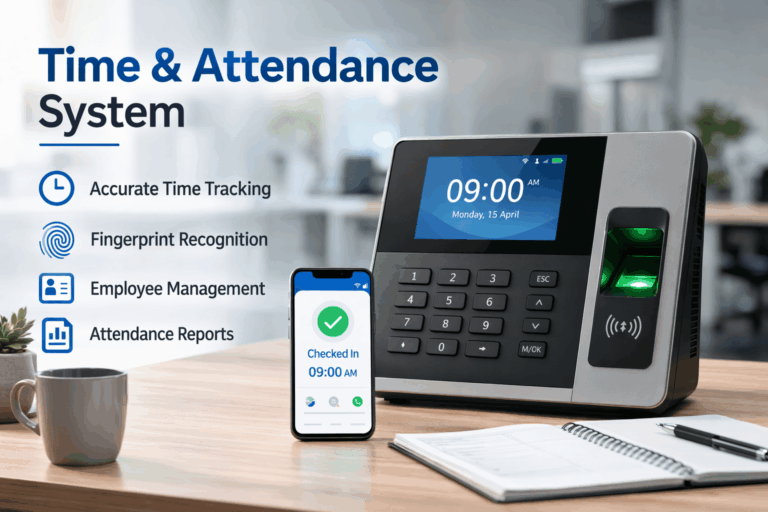
Modern time and attendance systems are designed to eliminate fraud while improving efficiency and transparency. These systems leverage advanced technologies to ensure accurate and reliable tracking.
1. Biometric Authentication
Biometric systems—such as fingerprint and facial recognition—ensure that each employee’s identity is verified before recording attendance.
This eliminates buddy punching completely, as biometric data cannot be shared or duplicated.
2. Real-Time Monitoring
Managers can monitor attendance in real time, allowing immediate detection of irregularities. This proactive approach helps prevent issues before they escalate.
3. Automated Records and Reporting
Digital systems automatically record and store attendance data, reducing human error and preventing manipulation.
Comprehensive reports provide insights into employee behavior, punctuality, and work patterns.
4. Integration with Payroll Systems
Time and attendance systems integrate seamlessly with payroll, ensuring employees are paid accurately based on verified working hours.
This reduces disputes and improves trust between employers and employees.
5. Access Control Integration
Many systems can be linked with access control solutions, ensuring that attendance is tied to actual physical presence in the workplace.
This adds an extra layer of security and accountability.
Key Features to Look for in a Time and Attendance System
Accuracy and Reliability
Choose systems with high precision to ensure every entry and exit is correctly recorded.
Scalability
The system should support business growth, accommodating more employees and multiple locations.
User-Friendly Interface
An intuitive system encourages employee adoption and reduces training time.
Cloud-Based Access
Cloud solutions allow remote monitoring and data access, ideal for businesses with multiple branches across Malaysia.
Customizable Reporting
Detailed and customizable reports help management make informed decisions.
Best Practices to Prevent Attendance Cheating
Establish Clear Policies
Define attendance rules clearly and communicate them to all employees. Consistency is key to enforcement.
Use Biometric Systems
Implement biometric authentication to ensure accurate identity verification.
Conduct Regular Audits
Periodic checks on attendance data help identify unusual patterns and prevent fraud.
Promote a Culture of Accountability
Encourage transparency and integrity within the organization. Employees are less likely to cheat in a culture that values accountability.
Provide Flexible Solutions
Modern systems can support flexible working hours while maintaining control, reducing the need for dishonest practices.
Why Malaysian Companies Are Moving Toward Smart Attendance Systems
Malaysia’s business landscape is evolving, with increasing adoption of digital and automated solutions. Companies are recognizing that traditional attendance methods are no longer sufficient in a fast-paced, technology-driven environment.
Smart time and attendance systems offer:
- Enhanced accuracy and efficiency
- Reduced operational costs
- Improved employee accountability
- Better compliance with labor regulations
These benefits make them an essential investment for forward-thinking organizations.
The Future of Workforce Management in Malaysia
As technology continues to advance, time and attendance systems will become even more sophisticated. Future trends include:
- AI-driven attendance analytics
- Mobile-based clock-in solutions
- Geolocation tracking for remote workers
- Seamless integration with smart office ecosystems
These innovations will further strengthen workforce management and eliminate opportunities for fraud.
Conclusion: Building a Transparent and Efficient Workplace
Employee attendance cheating is a challenge that no organization can afford to ignore. However, with the right strategies and technologies, it can be effectively eliminated.
Modern time and attendance systems provide a powerful solution by combining biometric authentication, real-time monitoring, and automated processes. By adopting these systems, Malaysian businesses can create a more transparent, efficient, and accountable workplace.
Ultimately, preventing attendance fraud is not just about control—it is about building trust, improving productivity, and driving long-term success.
More details about the system can be found in this product solution. Click here: https://www.smartouch.com.my/time-and-attendance-malaysia/
Smart Touch technology pte ltd , www.smartouch.com.sg +65-63964767, sales@smartouch.com.sg , www.smartouch.com.my +607-3889903 sales@smartouch.com.my